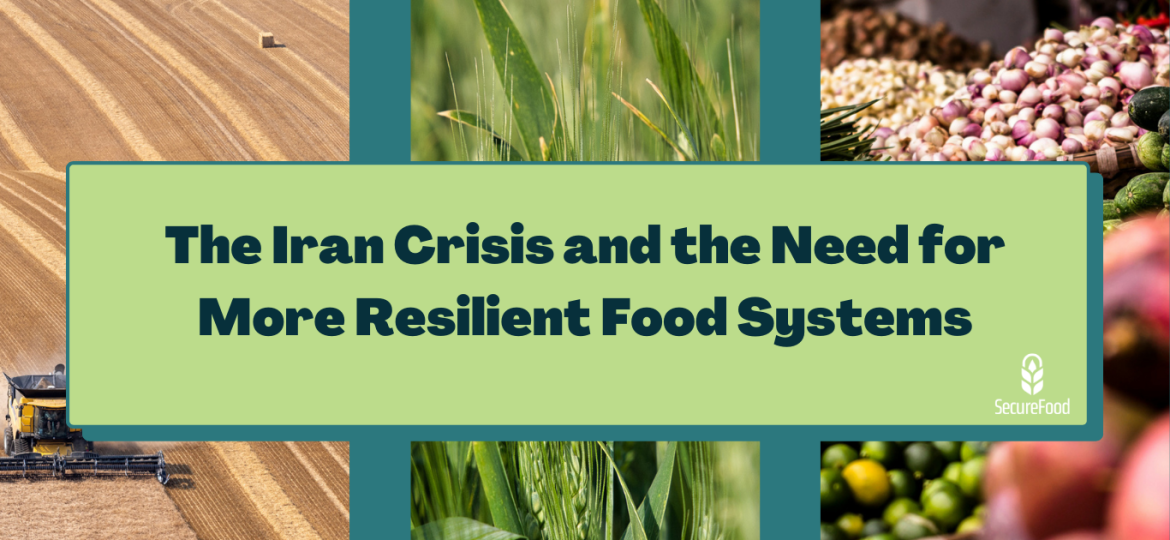
With recent geopolitical tensions in the Middle East, specifically in relation to the conflict involving Iran, we are once again reminded of how closely global food systems are tied to international stability and the potential for them to be disrupted on a global scale. While the direct impacts of war are often felt locally, their ripple effects can cause shockwaves that travel far beyond the tragic impacts of the conflict zone itself. Indeed, the effect on energy markets, transport routes, supply chains, and the price and availability of food are further devastating conflicts of regional wars that can emanate around the world.
From Energy Markets to Food Prices
For consumers in Europe, rising costs are one of the most immediate and noticeable consequences. From higher fuel prices that can increase transport expenses, to trade route disruptions that can slow deliveries, and uncertainty in global markets can drive volatility in commodity prices.. Modern food systems will not go unscathed, as they are highly interconnected networks that rely on complex infrastructures, global trade flows, and coordinated logistics. When one part of this system is disrupted, the effects can cascade rapidly across borders and sectors.
In recent years, international crises such as the COVID-19 pandemic, the obstruction of the Suez Canal, and Russia’s invasion of Ukraine have exposed how vulnerable food supply chains can be to sudden shocks. Disruptions to grain exports, transport bottlenecks, and fluctuating energy prices have demonstrated severe threats to the stability of food systems and how they can increase food insecurity worldwide.
Strengthening Food System Resilience: The Role of SecureFood
The SecureFood project was devised precisely to address these challenges. Its central objective is to strengthen the resilience of food systems so that they can better anticipate, withstand, and recover from disruptions, whether they have been caused by geopolitical conflict, extreme weather events, market shocks, or other crises.
Rather than focusing on a single aspect of the supply chain, the SecureFood project adopts a multilateral, systems-thinking approach in response. Food systems involve many interconnected actors and infrastructures, from farmers and food processors to transport operators, retailers, policymakers, and consumers, and a disruption in one area can quickly affect others. SecureFood therefore brings together experts and stakeholders from across the entire food ecosystem to address such challenges and better understand these interdependencies for the development of practical strategies to manage risk.
A key part of this work involves developing an ecosystem of scientific knowledge, collaborative processes, and digital tools that designed with the fundamental purpose to support decision-making before, during, and after crises occur. As one example, SecureFood is developing digital models and simulation tools that can help anticipate potential supply chain disruptions, as well as data-driven monitoring systems that provide early warning signals when risks begin to emerge. When armed with these tools, policymakers, food producers, and logistics operators are empowered to respond more quickly and effectively mitigate emerging threats.
The project also emphasises the urgent need for collaboration and information exchange between public authorities and private sector actors. Effective crisis preparedness requires not only better data and forecasting tools, but also stronger coordination among those responsible for keeping food moving through complex supply chains.
Preparing Food Systems for an Uncertain Future
Geopolitical crises such as the current tensions involving Iran remind us that food security is a major consequence of war that cannot be taken for granted. By improving preparedness, strengthening cooperation, and harnessing digital innovation, initiatives like SecureFood aim to ensure that food systems remain stable and resilient in the face of such challenges in an increasingly unpredictable, and uncertain, international landscape.
 The SecureFood project is funded by the European Union’s Horizon Europe research and innovation programme under grant agreement No. 101136583. Views and opinions expressed are however those of the author(s) only and do not necessarily reflect those of the European Union or the European Research Executive Agency (REA). Neither the European Union nor the granting authority can be held responsible for them.
SecureFood social media channels:
- Website: https://secure-food.eu/
- LinkedIn: SecureFood
- Bluesky: @securefoodeu.bsky.social
- X: SecureFoodEU
- YouTube: @SecureFood