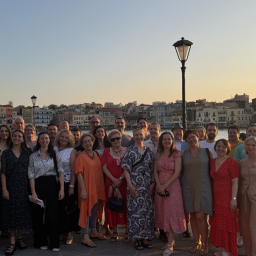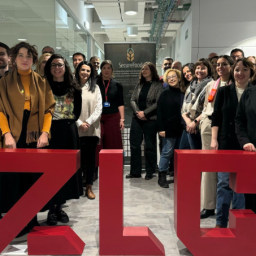
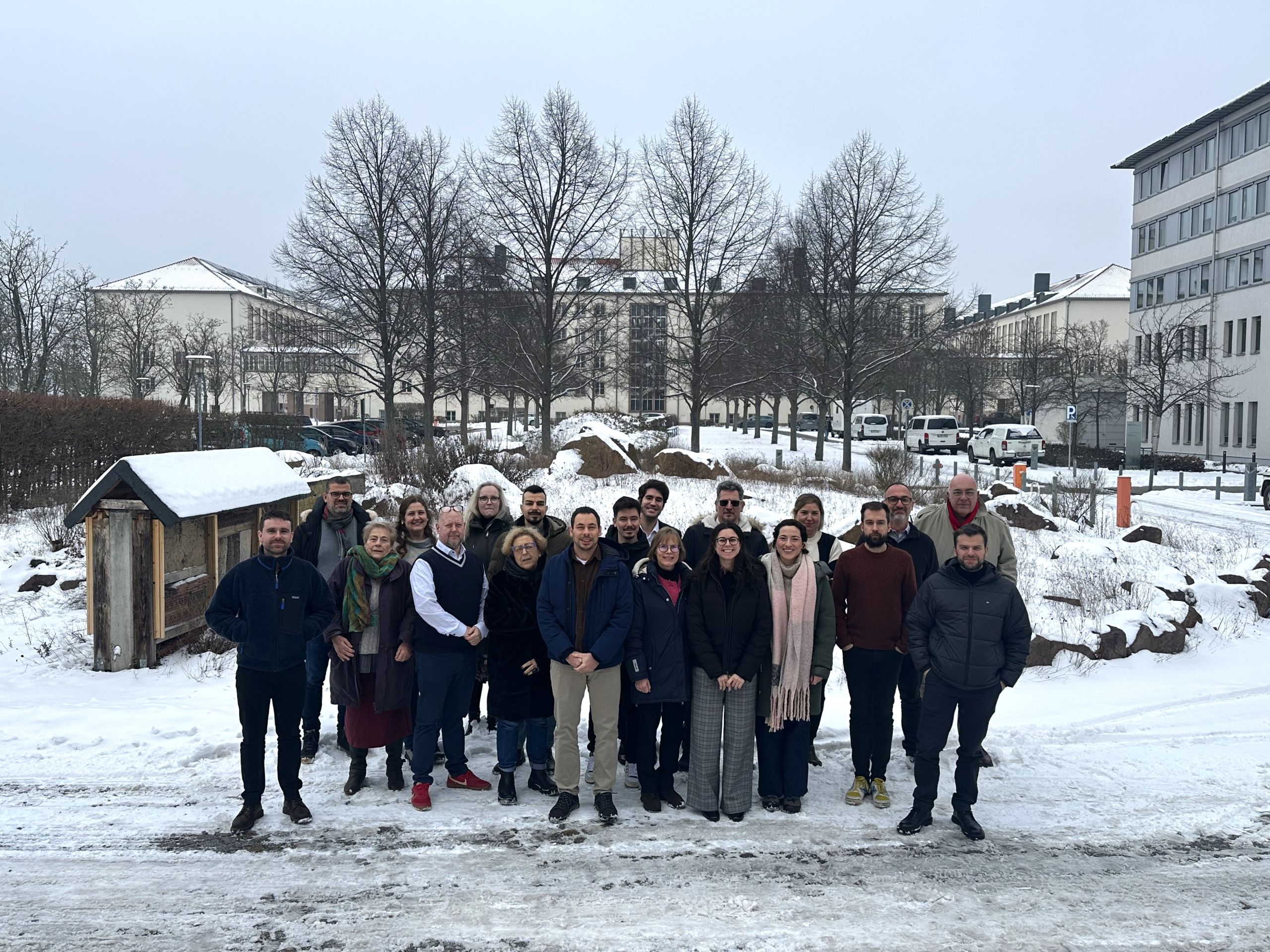
At the first plenary meeting of 2026, the SecureFood consortium came together in Halle, Germany to reflect on progress and shape the next phase of work as the project enters its final 18 months. Hosted by and in the historical building of the Leibniz Institute of Agricultural Development in Transition Economies (IAMO), the meeting opened with a welcome highlighting the institute’s history and its contribution to tackling agricultural and food-system challenges.
Two years into the project, partners reviewed achievements and priorities ahead, focusing on how individual contributions align with collective impact. Discussions reinforced the importance of coordination and ambition in ensuring that remaining activities maximise outcomes for food-system resilience.
Seeing the system — and its vulnerabilities — more clearly
Participants explored the interconnected nature of modern food systems, noting how disruptions cascade across supply chains, markets, and communities rather than occurring in isolation. This systems perspective encouraged partners to consider resilience as a shared challenge that extends beyond individual domains.
Demonstrations showcased modelling approaches and digital tools designed to simulate food-system dynamics, helping partners examine how different variables influence outcomes such as waste, loss, and supply stability. Presentations on emerging monitoring platforms and preparedness tools highlighted the role of digitalisation in improving awareness, facilitating information sharing, and strengthening responses during disruptions. Updates on prototype development and stakeholder engagement emphasised collaboration in building solutions that are both technically robust and practical in real-world settings.
Interactive sessions concluded the first day, enabling partners to exchange lessons from early pilot activities and reflect collectively on progress across disciplines.
Empowerment, communication, and shared understanding
The second day shifted focus toward people and decision-making within food systems. Sessions addressed engagement initiatives, collaborative learning environments, and training designed to strengthen stakeholder capacity. Crisis communications emerged as a central theme, with workshops examining how messaging during crises affects coordination, trust, and action. Participants considered not only what information is shared, but how and when it is delivered.
The meeting closed with hands-on exploration of developing tools and a shared reflection on priorities moving forward.
Moving forward together
Plenary meetings highlight that SecureFood’s strength lies in collaboration. As the project progresses, the insights generated in Halle will guide continued efforts to strengthen resilience and support stable food supply systems.
The SecureFood project is funded by the European Union’s Horizon Europe research and innovation programme under grant agreement No. 101136583. Views and opinions expressed are however those of the author(s) only and do not necessarily reflect those of the European Union or the European Research Executive Agency (REA). Neither the European Union nor the granting authority can be held responsible for them.
Follow us on:
LinkedIn: SecureFood
BlueSky: @securefoodeu.bsky.social
X: @SecureFoodEU